The seemingly simple act of ironing clothes relies heavily on the quality and functionality of an ironing board and cover. Globally, this household essential plays a vital role in maintaining presentable attire, impacting everything from professional success to personal confidence. The market for ironing boards and covers is substantial, driven by population growth and evolving fashion standards, with a consistent demand across diverse socioeconomic groups. Understanding the intricacies of these items—from materials and construction to safety features and ergonomic design—is crucial for both consumers and manufacturers.
The importance of a reliable ironing board and cover extends beyond mere aesthetics. In professional settings like hospitality, healthcare, and retail, a crisp, clean appearance is paramount, demanding efficient and effective ironing solutions. Furthermore, the availability of affordable and durable ironing solutions contributes to improved hygiene and self-esteem, particularly within communities facing economic challenges. The continuous innovation in this sector, from space-saving designs to heat-reflective covers, showcases its enduring relevance.
Beyond the home, ironing boards and covers find applications in small businesses such as alterations and dry cleaning services, providing a cost-effective solution for fabric care. This highlights a broader impact on economic activity, supporting livelihoods and contributing to localized industries. The seemingly mundane ironing board and cover, therefore, is a surprisingly integral component of modern life.
The Global Significance of ironing board and cover
The demand for ironing boards and covers is remarkably consistent worldwide, underpinned by the universal need for well-maintained clothing. Data from the textile industry suggests a global market valuation in the billions, with steady growth projected in emerging economies. Factors driving this demand include increasing disposable incomes, a growing awareness of personal presentation, and the expanding apparel sector.
A key challenge remains access to affordable and quality ironing solutions in developing regions. Many communities rely on makeshift ironing setups, posing safety risks and compromising fabric care. Addressing this requires innovative approaches to design and distribution, focusing on durability and cost-effectiveness. The development of more sustainable and environmentally friendly materials also represents a growing global imperative.
Defining ironing board and cover
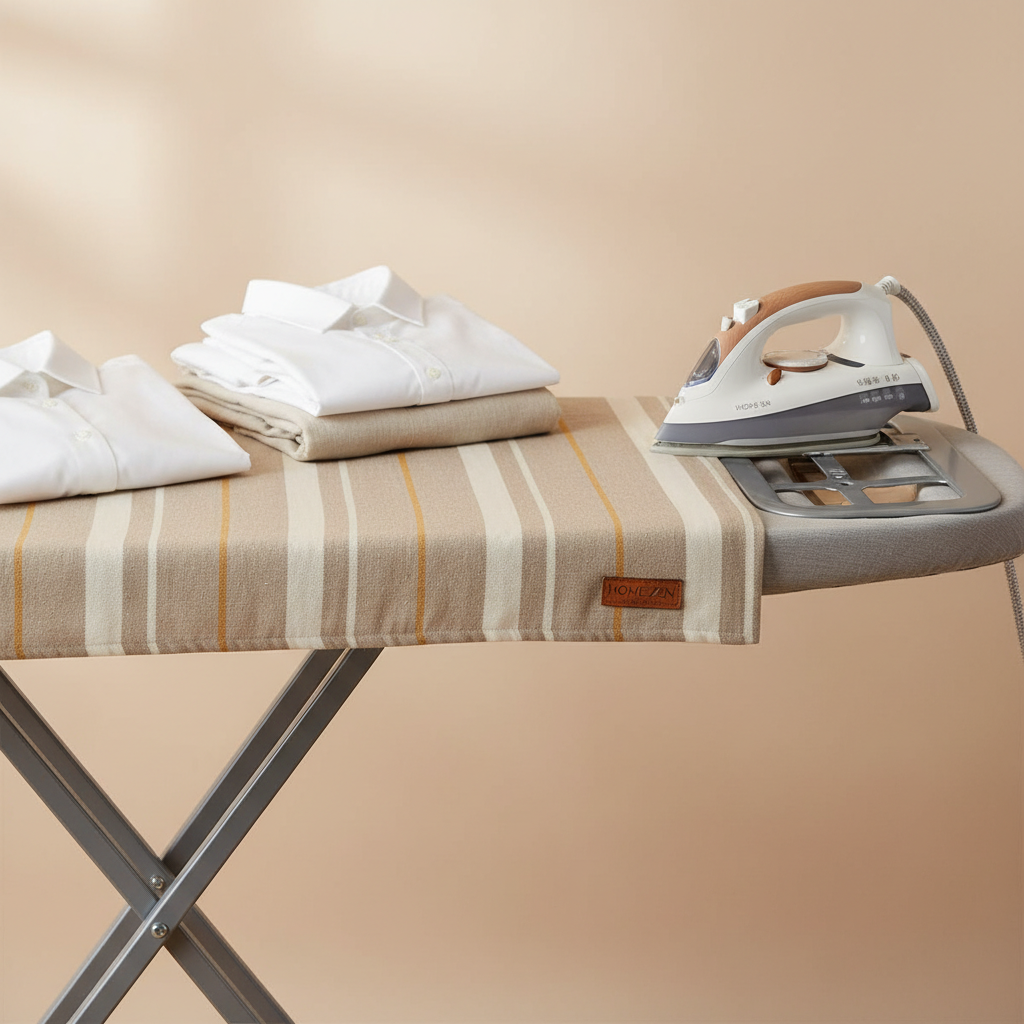
An ironing board is a stable, padded surface designed to support garments during the ironing process. Traditionally constructed from a metal frame and a cushioned top, modern boards often incorporate features like adjustable height and heat-reflective surfaces. Its primary function is to provide a smooth, even base for removing wrinkles and creases from clothing, linens, and other fabrics.
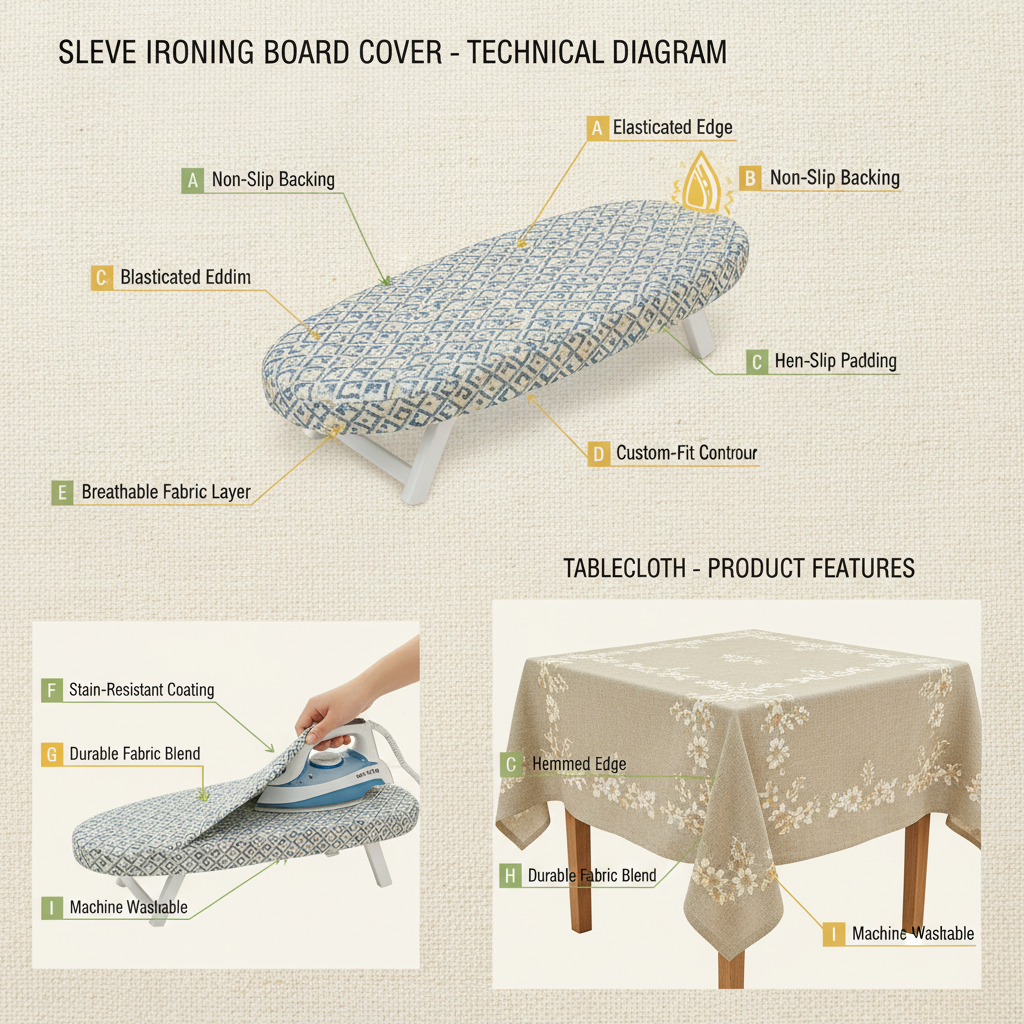
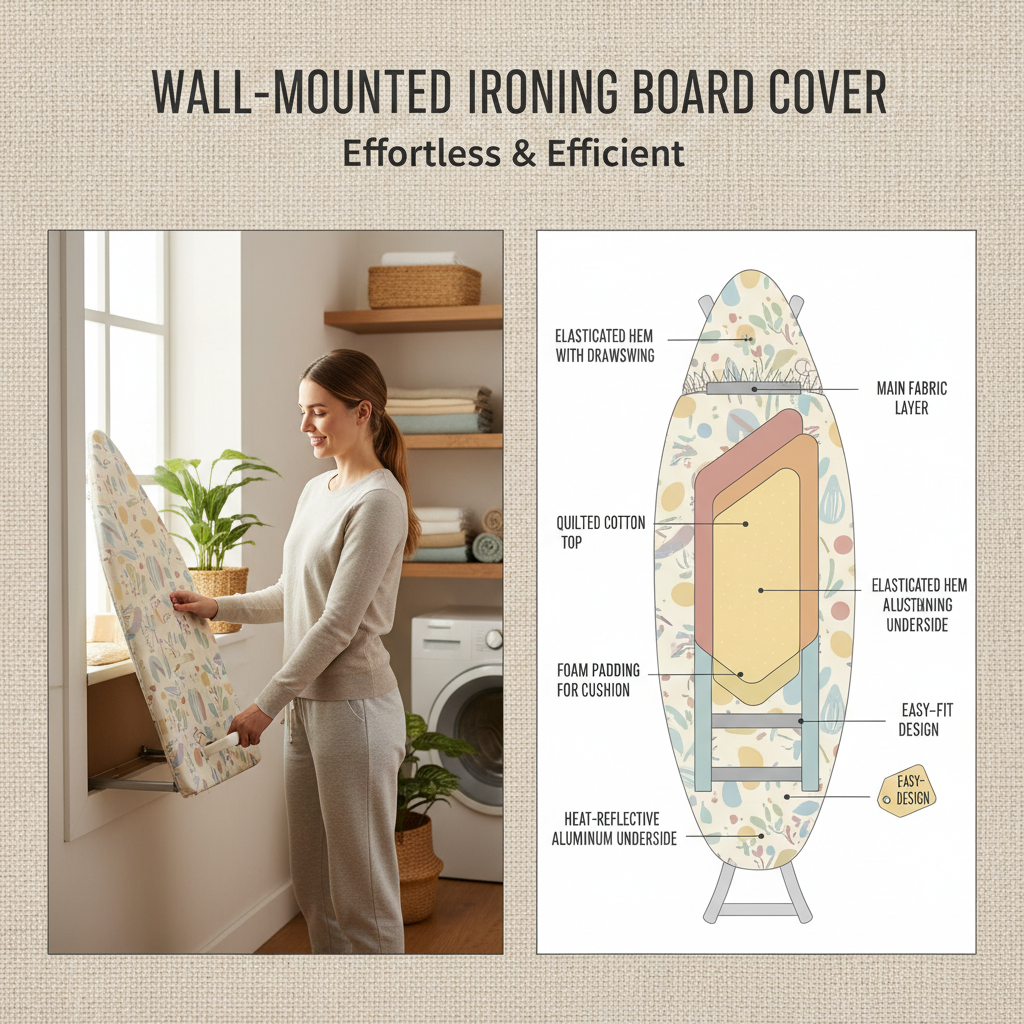
The ironing board cover, typically made from cotton, linen, or synthetic blends, protects the padding and enhances the ironing experience. A well-fitted cover provides a smooth surface for the iron to glide across, ensuring effective wrinkle removal and preventing scorching. The interplay between the board and cover is crucial for achieving optimal results.
In the context of modern industry, the ironing board and cover represent a crucial element in the textile value chain. From garment manufacturing to hospitality services, these tools ensure the quality and presentation of finished products. Their relevance extends beyond individual households, impacting various professional sectors.
Core Components and Features
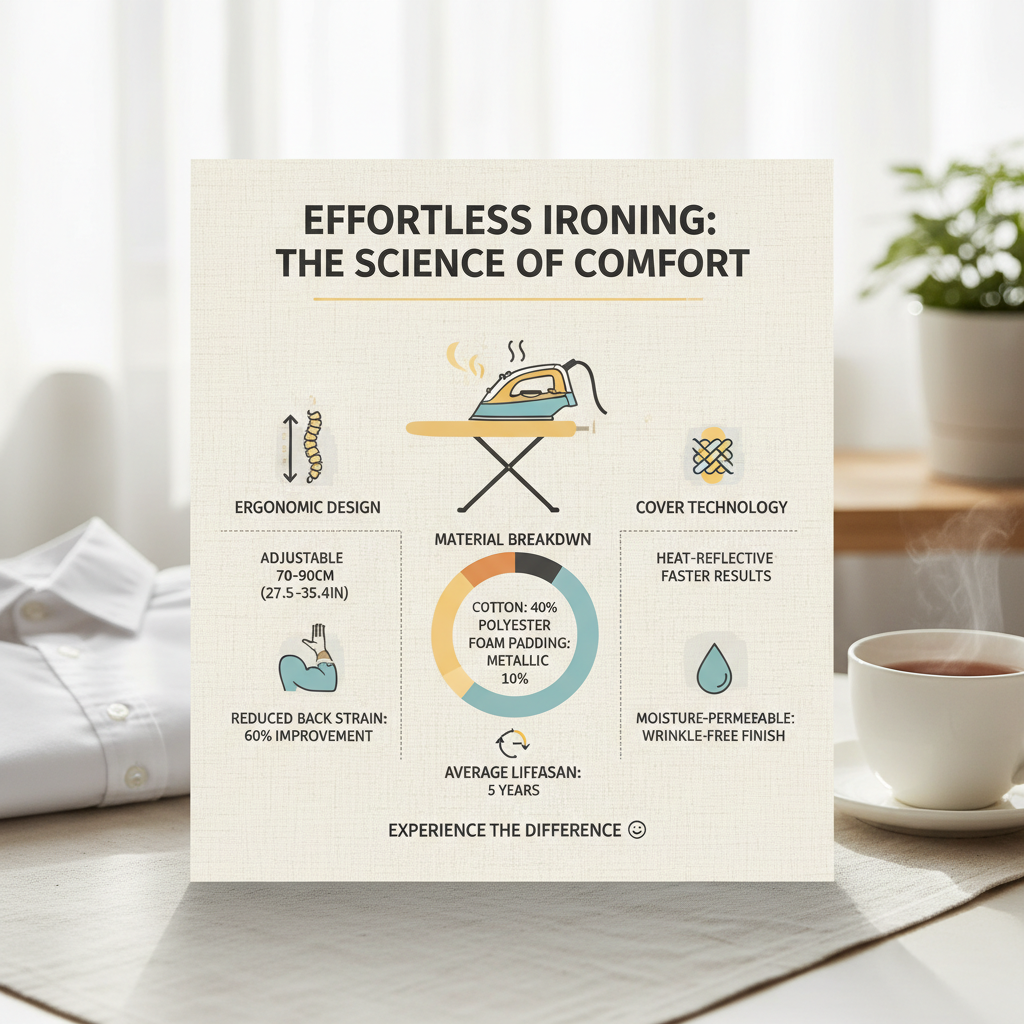
The core of an ironing board lies in its stability and adjustability. A sturdy frame, often constructed from steel, ensures the board remains steady during use. Adjustable height mechanisms allow users to customize the board to their preferred ergonomic position, reducing strain and enhancing comfort. The padding material plays a critical role in providing a smooth ironing surface.
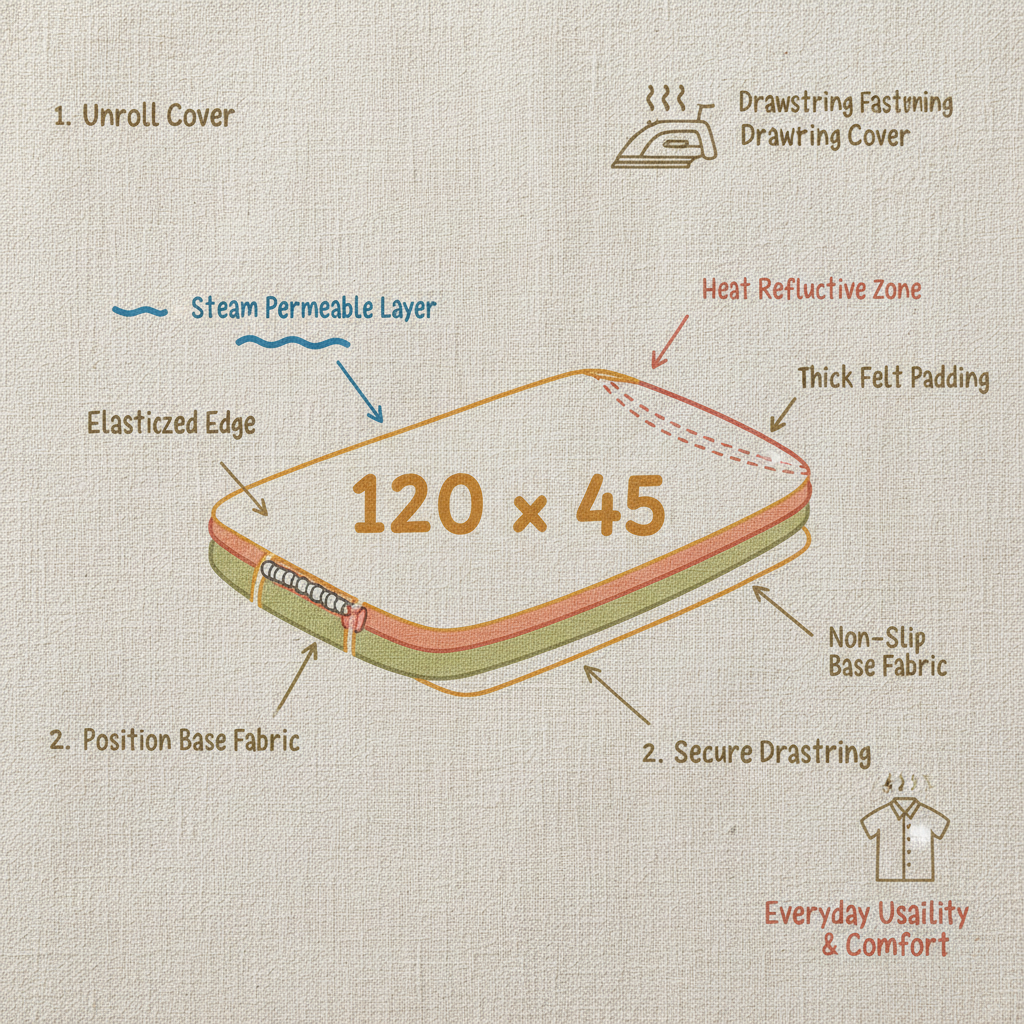
The ironing board cover is equally important. Factors like material composition, thickness, and elasticity contribute to its performance. Covers with a heat-reflective coating can reduce ironing time and energy consumption. A secure fit is essential to prevent shifting during use, which can lead to uneven ironing and potential safety hazards.
Additional features such as built-in cord holders, garment racks, and sleeve boards further enhance the functionality and convenience of an ironing board. These additions cater to diverse ironing needs and streamline the process.
Durability and Material Science
The durability of an ironing board depends largely on the quality of its materials and construction. Steel frames are generally more robust than aluminum, offering greater longevity. Padding materials, such as high-density foam, resist compression and maintain a consistent ironing surface for longer. The cover material also significantly impacts durability.
Advances in material science have led to the development of more resilient and heat-resistant cover fabrics. Silicone-coated cotton blends, for example, provide superior heat reflection and resistance to wear and tear. The use of reinforced stitching and durable elastic ensures a secure fit and prevents the cover from slipping or stretching out of shape.
Comparative Durability of ironing board and cover Materials
Global Applications and Market Sectors
The ironing board and cover market is diverse, extending beyond residential use. Commercial laundries, dry cleaning businesses, and hotels represent significant consumer segments, requiring durable and high-performance equipment. In the hospitality industry, maintaining a professional appearance for linens and guest clothing necessitates robust ironing solutions.
Textile manufacturing facilities also rely heavily on ironing boards for quality control and finishing processes. Tailors and alterations shops require compact and versatile boards to accommodate a wide range of garments. The demand for specialized boards, such as those designed for delicate fabrics, is also growing.
Advantages and Long-Term Value
Investing in a high-quality ironing board and cover offers long-term value through durability and consistent performance. A sturdy board reduces the need for frequent replacements, saving money over time. A good cover ensures efficient wrinkle removal, reducing ironing time and energy consumption.
Beyond cost savings, a reliable ironing setup contributes to improved clothing care, extending the lifespan of garments and reducing the need for frequent purchases. This promotes sustainability and responsible consumption. The convenience and efficiency of a well-designed ironing board also enhance the overall household experience.
The social impact of well-maintained clothing, facilitated by a dependable ironing board and cover, should not be underestimated. Presentable attire contributes to self-confidence and professional opportunities.
Future Trends and Innovations
The future of ironing boards and covers is likely to be shaped by sustainability and technological advancements. The development of eco-friendly materials, such as recycled fabrics and bamboo, is gaining momentum. Smart ironing boards, equipped with sensors and automated features, are also emerging.
Innovations in cover technology include self-cleaning and anti-microbial coatings. Space-saving designs, such as foldable and wall-mounted boards, are catering to the growing demand for compact living solutions. Digital integration, with features like remote control and personalized ironing settings, may also become increasingly common.
The integration of steam technology and heat regulation systems into ironing boards promises to revolutionize fabric care, offering advanced wrinkle removal and fabric refreshing capabilities.
Summary of Future Trends in ironing board and cover Development
| Trend Category |
Key Innovation |
Impact on User Experience |
Market Potential (1-10) |
| Materials |
Recycled Fabrics |
Enhanced Sustainability |
7 |
| Design |
Foldable Models |
Space Saving |
8 |
| Technology |
Smart Sensors |
Automated Ironing |
6 |
| Covers |
Anti-Microbial Coatings |
Improved Hygiene |
7 |
| Integration |
Steam Technology |
Advanced Wrinkle Removal |
9 |
| Manufacturing |
Automated Production |
Reduced Costs |
5 |
FAQS
Cotton ironing board covers are known for their breathability and ability to absorb moisture, resulting in a smoother ironing experience. However, they can shrink and wrinkle more easily. Polyester covers are more durable, wrinkle-resistant, and often more affordable. They may not offer the same level of breathability as cotton but are a practical choice for everyday use.
The lifespan of an ironing board cover depends on frequency of use and material quality. Generally, a cover should be replaced every 6-12 months, or sooner if it shows signs of wear and tear such as stains, tears, or a loss of padding. Regularly replacing the cover ensures optimal ironing performance and prevents damage to your clothes.
The ideal ironing board height depends on your height and comfort level. A general rule is to choose a board that allows you to iron with your elbows bent at a 90-degree angle. Adjustable height boards are recommended, allowing you to customize the height to your needs. Avoid ironing with a board that is too low, as this can cause back strain.
Most ironing board covers are machine washable. Check the care label for specific instructions. Generally, it’s recommended to wash the cover on a gentle cycle with mild detergent and tumble dry on low heat. Avoid using bleach or harsh chemicals, as they can damage the fabric. Regular cleaning helps to remove stains and maintain hygiene.
Ironing boards with a heat-reflective coating reflect heat back onto the garment, reducing ironing time and energy consumption. This can save you time and money while also making the ironing process more efficient. These coatings also help to prevent scorching and protect delicate fabrics.
Safety features to look for include a stable, non-slip base to prevent the board from tipping over. A locking mechanism to securely keep the board at the desired height is also essential. Additionally, choose a board with a heat-resistant cover and avoid using damaged or frayed cords. Always exercise caution when ironing to prevent burns.
Conclusion
In conclusion, the ironing board and cover, while often overlooked, represents a crucial component of modern life, impacting personal presentation, professional standards, and even economic activity. From its core functionalities of stability and heat management to emerging innovations in materials and technology, this essential household item continues to evolve. Its enduring relevance lies in its ability to address a fundamental need for well-maintained clothing, contributing to confidence, hygiene, and overall quality of life.
Looking ahead, the future of the ironing board and cover will be driven by sustainability, technological advancements, and a growing demand for convenience. By embracing eco-friendly materials, integrating smart features, and prioritizing user-centric design, manufacturers can create ironing solutions that are not only effective but also contribute to a more sustainable and efficient future. Visit our website at https://www.hbmectextiles.com to explore our range of high-quality ironing boards and covers.